
A no-spend challenge is a set period — a weekend, a week or a month — where you spend money only on essentials. It’s a powerful way to reset your habits, discover where money leaks out and free up cash for goals.
Why try a no-spend challenge?
- Save money fast for an emergency fund, debt payment or goal.
- Break autopilot spending — the coffees, snacks and online orders you barely notice.
- Learn your triggers: boredom, stress, social media, payday.
- Realise how little you need to enjoy life.
Step 1: Choose your length
If you’ve never done one, start small: a no-spend weekend or a no-spend week. When you feel confident, try 30 days.
Step 2: Write your rules
Clear rules prevent arguments with yourself later. Write two lists.
Allowed (essentials):
- Rent or mortgage and bills
- Groceries (from a list)
- Fuel or transport to work
- Medicine and essential toiletries
- Planned debt payments and savings
Not allowed:
- Takeaways and eating out
- Coffee and snacks out
- Clothes, shoes and accessories
- Online shopping and gadgets
- New subscriptions or apps
Make the rules fit your life. If a family birthday falls in the month, plan for it in advance.
Step 3: Prepare
- Plan meals for the whole period and do one big shop.
- Unsubscribe from shopping emails and delete shopping apps.
- Remove saved card details from websites.
- Tell friends and family so they can support you.
- Make a list of free activities for evenings and weekends.
Step 4: Survive the tricky moments
You will feel the urge to spend — that’s normal. When it happens:
- Pause and name the feeling. Bored? Tired? Stressed?
- Write it down on a “wish list” instead of buying it. Revisit the list after the challenge — you’ll be surprised how many things you no longer want.
- Do something free: a walk, a call with a friend, a library book.
Step 5: Track your progress
Colour in each day you stick to the rules. Seeing a row of coloured days is motivating, and it shows how far you’ve come.
Free things to do instead of spending
- Beach, park or nature walks
- Potluck dinners with friends
- Game or movie nights at home
- Library books, audiobooks and podcasts
- Free community events
- Decluttering — and selling what you don’t need
- Learning a new recipe from what’s in the cupboard
What if you slip up?
One unplanned purchase doesn’t ruin the challenge. Note what triggered it, and carry on. The goal is learning and progress, not perfection.
What to do with the money you save
Decide before you start. The best uses are your emergency fund, an extra debt payment (see snowball vs avalanche) or a sinking fund. Move the money on the last day so it doesn’t quietly get spent.
After the challenge
Look back: which purchases did you not miss at all? Keep those habits. Many people find they permanently spend less after just one month.
Frequently asked questions
How long should my first no-spend challenge be?
A weekend or a week is a great start. Once you’ve succeeded, try a full 30 days.
Can I still see friends?
Yes! Suggest free activities like a walk, a picnic or a potluck dinner. Most friends are happy to join in.
What counts as an essential?
Housing, bills, basic groceries, transport to work, medicine and planned debt payments. Write your own list before you start so the rules are clear.
The Savings Challenge Pack and the Debt-Free Kit both include a printable 30-day No-Spend Challenge with rule lists and a tracker to colour in.
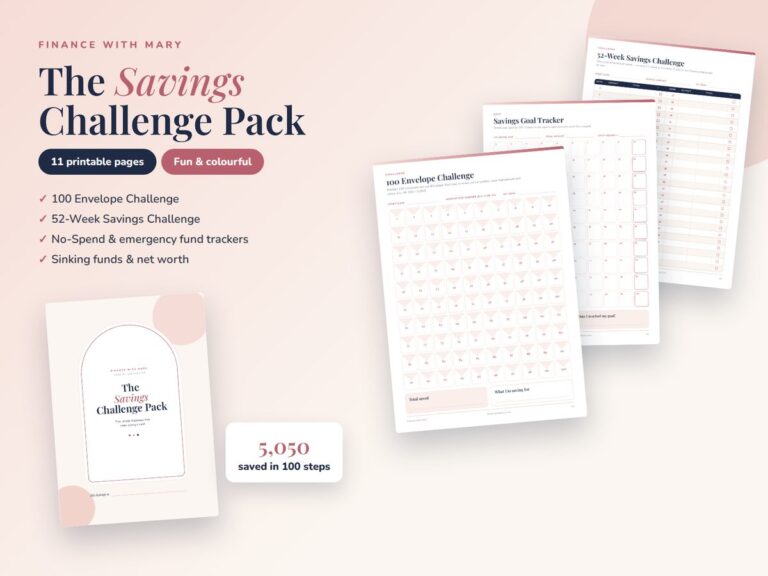
The Savings Challenge Pack
11 printable pages: 100 envelope, 52-week and no-spend challenges, plus savings goal and emergency fund trackers.
