

There’s a limit to how much you can cut from a budget, but there’s no fixed limit to how much you can earn. A side hustle — work you do alongside your main job — can speed up debt payoff, build your emergency fund or fund a goal.
These ideas are realistic and low-cost to start. None of them are “get rich quick”: they take effort, and results vary. But even an extra $100–$300 a month can change your financial picture.
Use skills you already have
- Tutoring. Help students with school subjects, languages or exam preparation, in person or online.
- Freelance writing or editing. Blog posts, product descriptions, CVs and proofreading for small businesses.
- Graphic design. Logos, social media graphics and flyers for local businesses.
- Bookkeeping or admin support. Many small businesses need a few hours of help each month.
- Translation. If you speak more than one language, translation and interpreting can be in demand.
Services in your community
- Pet sitting and dog walking. Flexible hours and low start-up costs.
- Babysitting for families in your area.
- Cleaning or decluttering help. Homes, offices or end-of-tenancy cleans.
- Handyman jobs. Small repairs, furniture assembly, painting.
- Baking or home cooking for events — check local food safety rules first.
Selling and creating
- Sell things you no longer need. Clothes, electronics, furniture and baby items — a quick way to raise cash.
- Handmade products. Jewellery, candles, crafts or art sold online or at markets.
- Digital products. Printables, templates and guides you create once and sell many times.
- Photography. Family portraits, events or product photos for small businesses.
- Social media management for local businesses that don’t have time to post.
How to choose the right side hustle
- Time: how many hours a week can you realistically give?
- Skills: what are you already good at, or what do people ask you for help with?
- Start-up costs: choose ideas that need little or no money to begin.
- Enjoyment: you’re more likely to stick with something you like.
Avoid side hustle traps
- Be wary of anything that asks you to pay a large fee to join or buy stock up front.
- Avoid schemes that depend on recruiting other people.
- Be cautious of promises of “guaranteed” or very high income.
- Don’t borrow money to start a side hustle.
Don’t forget tax and admin
Extra income is usually taxable. Keep records of what you earn and spend, set aside a portion for tax, and check your local rules. Keep side hustle money separate from personal money if you can.
Give your extra income a job
The biggest mistake is letting side hustle income disappear into everyday spending. Decide in advance where it goes:
- Your emergency fund
- Extra debt payments — see snowball vs avalanche
- Your sinking funds and goals
Frequently asked questions
How much can I earn from a side hustle?
It varies widely depending on the work, your skills and the time you can give. Start small, track your earnings and grow what works.
Do I need to register a business?
It depends on where you live and how much you earn. Check your local tax and business rules, and keep records from the start.
How do I find time?
Look at your week honestly: an hour a day or a few hours at the weekend is often enough to start.
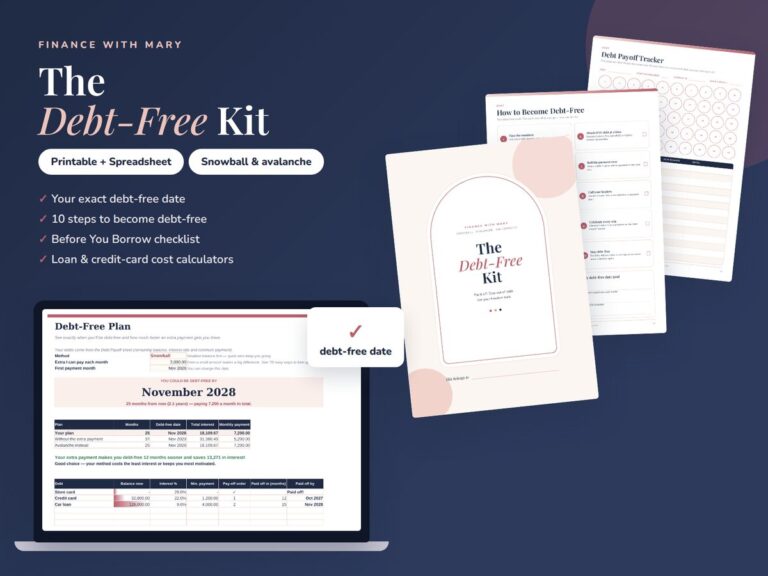
The Debt-Free Kit shows exactly how much sooner you’ll be debt-free if you put your extra income towards your debts.
 New
New
The Debt-Free Kit
Printables + spreadsheet: your debt-free date, a 10-step plan, payoff trackers and a Before You Borrow checklist.
