
The car breaks down. The fridge stops working. Your hours get cut. Life is full of surprises, and without savings, each one tends to end up on a credit card. An emergency fund is money set aside for exactly these moments. It’s the foundation of every healthy financial plan.
What counts as an emergency?
An emergency is something unexpected, necessary and urgent:
- Losing your job or income
- Urgent medical or dental costs
- Essential car or home repairs
- Emergency travel for family
A holiday, a sale or a birthday is not an emergency. Predictable costs belong in sinking funds instead.
How much do you need?
Build it in stages so it never feels impossible:
- Starter fund: $500–$1,000, or one month of essential expenses. This stops small emergencies becoming debt.
- Full fund: three to six months of essential expenses.
- Bigger fund: six months or more if you’re self-employed, have an irregular income or are the only earner.
To find your number, add up your essential monthly costs (housing, utilities, food, transport, insurance, minimum debt payments) and multiply. Read how much should you have in savings for more detail.
Where to keep it
Your emergency fund should be:
- Separate from your everyday account, so you don’t spend it by accident
- Easy to access within a day or two
- Safe — not invested in shares that could fall just when you need the money
A separate savings account, ideally one that pays some interest, is usually the best option.
10 ways to build it faster
- Automate it. Set up an automatic transfer on payday, even if it’s small.
- Save windfalls. Tax refunds, bonuses and gifts go straight to the fund.
- Do a no-spend month. Spend only on essentials and save the difference. See how to do a no-spend challenge.
- Sell what you don’t use. Clothes, furniture, electronics, baby gear.
- Cancel one subscription and redirect the payment.
- Round up. Round every purchase up and save the difference.
- Use a savings challenge like the 52-week challenge to make it fun.
- Cut grocery costs with meal planning — see 25 grocery savings tips.
- Pick up extra work for a month or two.
- Save raises. When your income goes up, save the difference before you get used to spending it.
What if I have debt?
It’s a common question: should you save or pay off debt first? Many people find this order works well:
- Build a starter emergency fund (about one month of essentials).
- Pay off high-interest debt as fast as you can.
- Then grow your emergency fund to three to six months.
The starter fund protects your debt payoff plan from being knocked off course.
Using your emergency fund
When an emergency happens, use the fund — that’s what it’s for. There’s no shame in it. Afterwards, make rebuilding it your top priority until it’s back to your target.
Track your progress
Frequently asked questions
Should I invest my emergency fund?
Usually not. Investments can fall in value just when you need the money. Keep your emergency fund in an easy-access savings account.
Is it okay to use the fund for a planned expense?
It’s better not to. Planned costs like holidays and gifts belong in sinking funds. Keep your emergency fund for true emergencies.
How long will it take to build?
That depends on how much you can save each month. Even saving $25 a week builds $1,300 in a year — a strong starter fund for many people.
Seeing progress keeps you motivated. Colour in a tracker, update a spreadsheet or write your balance on a sticky note. The Savings Challenge Pack includes an Emergency Fund tracker with a “fill it up” thermometer to colour in as you save.
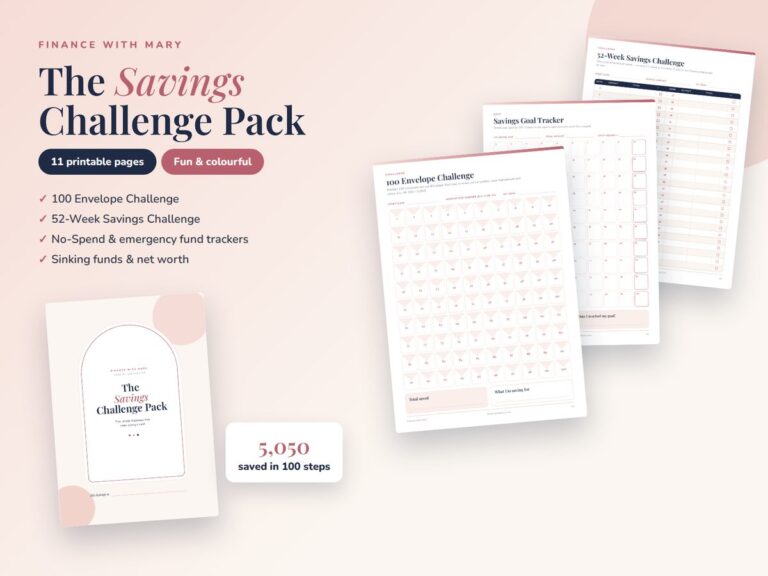
The Savings Challenge Pack
11 printable pages: 100 envelope, 52-week and no-spend challenges, plus savings goal and emergency fund trackers.
