
“How much should I have saved?” is one of the most common money questions. The honest answer is that it depends on your life, income and goals. But you don’t need a perfect number — you need a useful one. Here’s a simple way to work it out.
Think in buckets, not one big number
Instead of one savings total, think about three buckets:
- Emergency savings — for the unexpected
- Short-term goals — things you’ll pay for within a few years
- Long-term savings — retirement and wealth building
1. Emergency savings
A common guideline is three to six months of essential expenses. Essentials include housing, utilities, food, transport, insurance and minimum debt payments — not your full spending.
Example: If your essentials are $1,800 a month:
- Starter fund (1 month): $1,800
- Three months: $5,400
- Six months: $10,800
Aim for the higher end if you’re self-employed, have an irregular income, support a family on one income or work in an unstable industry. See how to build an emergency fund.
2. Short-term goals
For anything you’ll need in the next one to five years — a car, a holiday, a wedding, a home deposit or school fees — work backwards:
Goal amount ÷ months until you need it = monthly saving
Example: a $3,000 car fund in 18 months = about $167 a month. Use sinking funds to manage several goals at once.
Money needed within a few years is usually best kept in savings accounts rather than investments, because investments can fall in value just when you need the cash.
3. Long-term savings and retirement
For long-term goals, many guides suggest saving around 10–15% of your income for retirement over your working life, including any employer contributions. The right amount depends on when you start, your pension system and your plans. If you’re starting later, you may need to save more.
Long-term money is often invested so it has a chance to grow faster than inflation. Read investing for beginners for the basics, and consider speaking with a qualified, independent adviser.
What order should you save in?
A sensible order for many people is:
- Starter emergency fund (one month of essentials)
- Pay off high-interest debt
- Full emergency fund (three to six months)
- Sinking funds for planned costs
- Long-term investing and retirement
Our 7-step money roadmap explains each step.
What if you’re starting from zero?
That’s completely okay — many people are. Start with a small, achievable goal: $500, or $20 a week. Automate it, and increase it whenever your income goes up. Your savings rate matters more than your starting point.
A quick savings health check
- Savings rate: what percentage of your income do you save each month? 10% is a good start, 20% is great.
- Emergency months: how many months of essentials could you cover today?
- Goal progress: are your sinking funds on track for upcoming costs?
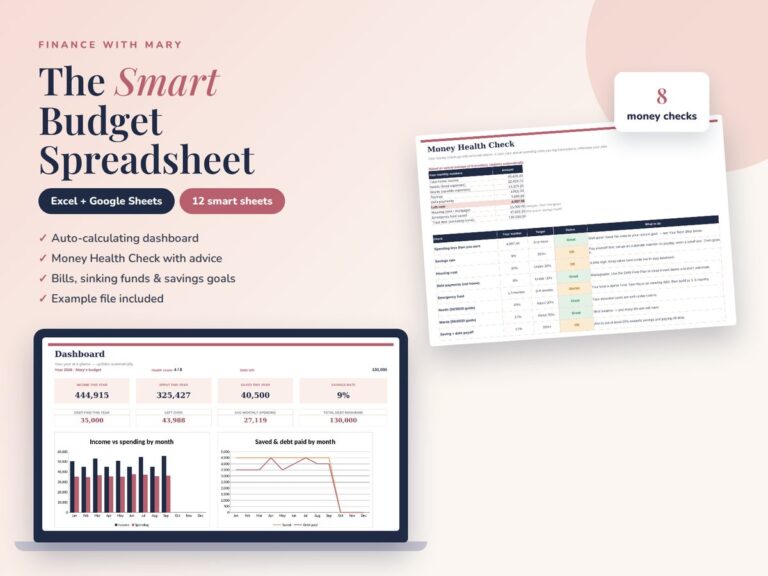
The Smart Budget Spreadsheet calculates your savings rate and emergency fund months automatically and gives you a personal next step in its Money Health Check.
 Most popular
The Smart Budget Spreadsheet
12 smart sheets: dashboard, Money Health Check with personal advice, bills, sinking funds, savings goals and more.
