
“Split it into four interest-free payments!” Buy now, pay later (BNPL) buttons are everywhere — on clothing sites, electronics stores and even food delivery apps. It feels painless. But is it a good idea?
How buy now, pay later works
BNPL lets you take something home today and pay for it in instalments — often four payments over six weeks, or monthly payments over a longer period. Many short-term plans charge no interest if you pay on time. Longer plans may charge interest, sometimes at high rates.
The pros
- No interest on many short plans if every payment is on time.
- Spreads the cost of a necessary purchase over a few weeks.
- Quick and easy to use.
The cons and hidden risks
1. It makes overspending easy
A $200 jacket feels like a $50 jacket when you only see the first payment. Retailers offer BNPL partly because people tend to spend more when they can pay later.
2. Payments stack up
One plan is easy to track. Five plans across different apps, each with different dates, is not. Many people lose track of how much they owe in total.
3. Late fees
Miss a payment and you may pay late fees. Some providers also freeze your account or pass the debt to collections.
4. It can affect your credit
Depending on the provider and country, BNPL use and missed payments may be reported to credit agencies, which could affect future borrowing.
5. It’s still debt
“Interest-free” doesn’t mean “free”. It is still money you owe, and future income that is already spent.
Warning signs BNPL is becoming a problem
- You have more than one or two plans running at once
- You use BNPL for groceries or everyday essentials
- You’re not sure exactly how much you owe in total
- You use BNPL because you can’t afford the item right now
- You’ve paid a late fee
When BNPL might be OK
If you already have the money in your account, the purchase is planned and in your budget, you have only one plan running, and you set up automatic payments — BNPL is unlikely to cause harm. But if you have the money anyway, paying in full is simpler.
A better alternative: save first
Instead of paying later, try “saving before”. Put the same instalment amount into a savings pot for six weeks, then buy the item with cash. You get the same item, often with time to decide whether you still want it. For bigger planned costs, use sinking funds.
If you already have several BNPL plans
- List every plan, the amount left and the payment dates.
- Stop taking on new plans until all are paid off.
- Add the payments to your budget so nothing is missed.
- Delete saved payment details from shopping apps.
If BNPL is part of wider money stress, read warning signs you have too much debt.
Frequently asked questions
Is buy now, pay later the same as a credit card?
Not exactly. Short BNPL plans are often interest-free if paid on time, while credit cards charge interest on unpaid balances. But both are forms of borrowing, and both can lead to debt if you buy more than you can afford.
Can BNPL hurt my credit score?
It can, depending on your country and provider. Some providers report payments and missed payments to credit agencies. Always check the terms before you sign up.
Should I use BNPL to build credit?
It’s generally not a reliable way to build credit. Paying all your bills on time and keeping debt low is a safer approach.
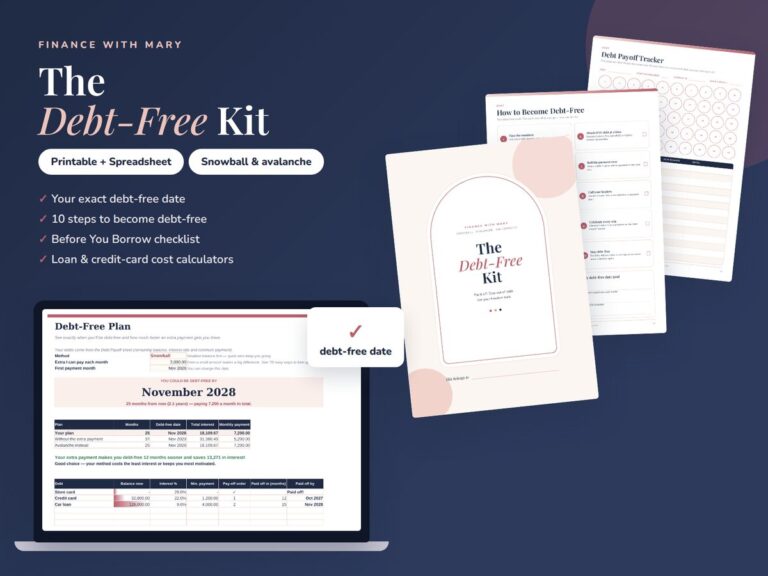
The Debt-Free Kit includes a Before You Borrow checklist that works for BNPL too — ten honest questions to answer before you click “pay later”.
 New
New
The Debt-Free Kit
Printables + spreadsheet: your debt-free date, a 10-step plan, payoff trackers and a Before You Borrow checklist.
