
Credit card debt is one of the most expensive kinds of debt. With interest rates often above 20% a year, a balance can grow faster than you can pay it down — especially if you only make the minimum payment. The good news: with a clear plan, you can clear it much faster than you might think.
1. Stop adding to the balance
You can’t empty a bath while the tap is running. While you pay off your card, stop using it for new purchases. Remove it from online shopping accounts and phone wallets, and use a debit card or cash instead.
2. Know exactly what you owe
Write down for each card: the balance, interest rate (APR), minimum payment and due date. It can be uncomfortable, but you can’t make a plan without the numbers.
3. Always pay more than the minimum
Minimum payments are designed to keep you paying for a long time. Paying even a little more makes a big difference. For example, a $3,000 balance at 22% with a fixed $90 payment takes roughly four years to clear; at $180 a month, it is gone in under two years — and you pay far less interest. Read more in the minimum payment trap.
4. Choose a payoff method
If you have several cards, focus extra money on one at a time:
- Snowball: smallest balance first, for quick wins.
- Avalanche: highest interest rate first, to save the most money.
Compare them in debt snowball vs avalanche.
5. Ask for a lower interest rate
It sounds simple, but it often works — especially if you have a good payment history. Call your card provider, explain you are working to pay off the balance and ask if they can reduce your rate. If they say no, ask what options they do have.
6. Consider a balance transfer — carefully
A 0% balance transfer card can pause interest for a set period, so all your payments go towards the balance. But check:
- The transfer fee (often 3–5% of the balance)
- How long the 0% lasts
- The rate afterwards
- Whether you can realistically clear the balance before the offer ends
A balance transfer only helps if you stop using the old card. Otherwise you end up with two debts.
7. Find extra money each month
- Review subscriptions and cancel what you don’t use
- Cook at home more and plan meals
- Sell clothes, electronics or furniture you no longer need
- Put bonuses, tax refunds and gifts straight onto the card
- Pick up extra shifts or freelance work for a few months
8. Make payments automatic
Set up an automatic payment for at least the minimum so you never pay late fees or penalty interest. Then make extra payments manually whenever you can.
9. Build a small emergency fund
It might feel strange to save while in debt, but a small cushion — $500 to one month of essentials — stops new emergencies from going straight back onto the card. Learn how in how to build an emergency fund.
Once it’s paid off
Congratulations! Now protect your progress:
- Redirect the money you were paying into savings.
- If you keep the card, pay the full balance every month.
- Use sinking funds for predictable costs so you don’t need credit.
When to get help
If you can’t afford even the minimum payments, don’t wait. Contact your lender before you miss a payment and look for a free, non-profit debt advice service in your country. See how to talk to your lender.
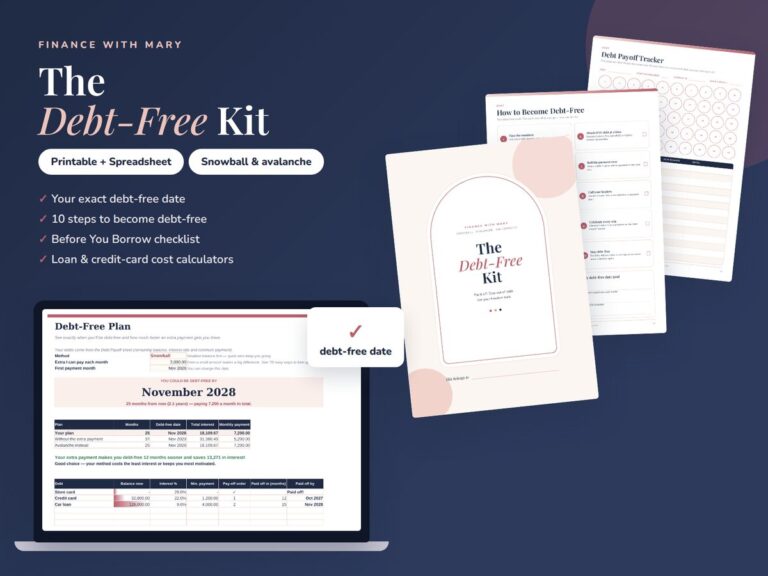
Want to see exactly when your cards will be paid off? The Debt-Free Kit includes a credit card calculator that shows how long the minimum payment would take — and how much faster you’ll be free with a little extra.
 New
New
The Debt-Free Kit
Printables + spreadsheet: your debt-free date, a 10-step plan, payoff trackers and a Before You Borrow checklist.
