
Most budgeting advice assumes there is plenty of room to cut back. But when your income barely covers the essentials, being told to “skip the latte” isn’t helpful. If money is tight, you need a plan that is realistic and kind — not guilt.
Here are practical steps that can help when every dollar counts.
1. Protect the essentials first
When money is limited, order matters. Pay these first, in roughly this order:
- Housing (rent or mortgage)
- Utilities (electricity, water, heating/cooling)
- Food
- Transport to work
- Essential medicines
Then minimum debt payments and everything else. Keeping a roof over your head and food on the table always comes before other bills.
2. Know your numbers exactly
On a small income, small amounts matter. Write down every expense for one month — even the coins. It is not about judging yourself; it is about finding where money goes so you can make choices on purpose.
3. Budget per paycheck, not per month
If you are paid weekly or fortnightly, plan each paycheck separately. Decide which bills each paycheck will cover. This prevents the common problem of a big bill arriving just before payday.
4. Cut costs where it hurts least
Look for savings that don’t reduce your quality of life much:
- Phone and internet: call your provider and ask for their cheapest plan, or switch.
- Subscriptions: keep one streaming service, cancel the rest, rotate monthly.
- Groceries: plan meals, buy store brands and cook in batches (see 25 ways to save on groceries).
- Energy: switch off appliances at the wall and use fans before air-conditioning.
- Insurance: compare quotes every year — loyalty rarely pays.
5. Check what support you can get
Many people miss out on help they are entitled to. Depending on where you live, this may include government benefits, tax credits, school meal programmes, utility hardship schemes or community food banks. Spend an hour researching what is available in your area — it can make a real difference.
6. Start a tiny emergency fund
Even $5 or $10 a week matters. A small cushion of $200–$500 can stop a minor emergency from becoming a payday loan. Keep it in a separate account so it isn’t spent by accident. Our guide to building an emergency fund has more ideas.
7. Avoid expensive borrowing
When money is short, payday loans, rent-to-own stores and some buy-now-pay-later deals can look like lifelines. They often cost far more than they seem. Before borrowing, read 10 questions to ask before you take a loan. If you are already struggling with debt, talk to your lender early — and look for a free, non-profit debt advice service.
8. Look for ways to increase income
There is a limit to how much you can cut, but no limit to how much you can earn. Ideas include asking for more hours, selling things you no longer use, or starting a small side hustle. Even an extra $100 a month changes the picture.
9. Use free fun
A budget with no joy won’t last. Parks, beaches, libraries, free community events, game nights and potluck dinners cost little or nothing.
10. Be kind to yourself
Living on a low income is stressful, and it is not a personal failing. Celebrate small wins: a bill paid on time, $20 saved, a month without overdraft fees. Progress, not perfection.
A simple weekly routine
- Check your bank balance and upcoming bills.
- Plan meals for the week using what you already have.
- Set aside any money for bills due next week.
- Move even a small amount to savings.
Our printable planner includes a Paycheck Budget and Weekly Spending Tracker designed for tight budgets — simple, calm and easy to use.
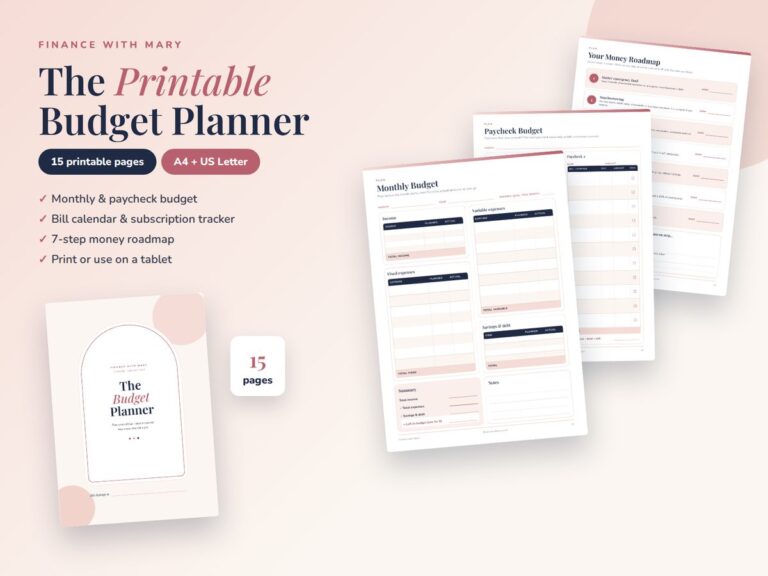
The Printable Budget Planner
15 beautiful printable pages: monthly and paycheck budgets, bill calendar, trackers and a 7-step money roadmap.
