

You made a budget, you stuck to it… and then the car needed new tyres, it was your nephew’s birthday and the annual insurance bill arrived. Suddenly the budget is in pieces.
Most budgets don’t fail because people overspend on coffee. They fail because of forgotten categories — real, predictable costs that simply weren’t in the plan. Here are twelve of the most common.
1. Annual and twice-yearly bills
Car insurance, home insurance, road tax, software subscriptions, memberships and professional fees often come once a year. Divide each by 12 and save that amount every month.
2. Car maintenance and repairs
Tyres, servicing, batteries and unexpected repairs are not “if” costs — they are “when” costs. Set aside a monthly amount even when nothing is broken.
3. Medical and dental costs
Check-ups, glasses, prescriptions and dental visits add up, especially for families. Look at what you spent last year and plan for a similar amount.
4. Gifts and celebrations
Birthdays, weddings, festivals, Christmas, Eid, Diwali, graduations — the list goes on. Write down every person and event for the year, estimate the cost, and divide by 12.
5. Back-to-school costs
Uniforms, shoes, books, stationery and trips often land in one expensive month. A small monthly saving makes that month painless.
6. Home maintenance
A leaking tap, a broken fridge, paint, a new mattress. Many people aim to save around 1% of their home’s value per year for maintenance if they own, and a smaller amount if they rent.
7. Clothing and shoes
Children grow, work shoes wear out, and seasons change. Clothes are rarely a monthly expense but they are a yearly one.
8. Personal care
Haircuts, toiletries and skincare are easy to overlook because each purchase is small. Track them for a month and you may be surprised.
9. Pet costs
Food is predictable; vet bills, vaccinations and grooming are not. Include both.
10. Subscriptions you forgot you had
Free trials that became paid plans, app subscriptions and memberships quietly drain your account. Go through your statements and list every recurring payment. Then decide: keep or cancel?
11. Bank fees and interest
Overdraft fees, card fees and interest charges are a cost of borrowing. Put them in your budget so you can see — and reduce — them.
12. Fun money
Yes, really. A budget with no room for enjoyment usually collapses. A small, guilt-free amount for each person in the household keeps the plan realistic.
How to plan for irregular costs: sinking funds
The solution to almost every item on this list is a sinking fund: a small amount saved each month for a specific future cost. For example:
- Car insurance $600 a year → $50 a month
- Gifts $480 a year → $40 a month
- School costs $360 a year → $30 a month
When the bill arrives, the money is already waiting. No stress, no credit card. Learn how to set them up in our guide to sinking funds.
Do a yearly expense audit
Once a year, sit down with 12 months of bank statements and highlight anything that isn’t a regular monthly bill. Each one belongs in your budget, either as a monthly category or a sinking fund. This one exercise can make your budget far more accurate.
Quick checklist
- Have I listed every annual bill?
- Do I save monthly for car and home repairs?
- Have I planned for gifts and celebrations this year?
- Do I know every subscription I pay for?
- Is there a little fun money in the plan?
Our printable planner includes an Annual Bill Calendar and a Subscription Tracker so nothing slips through the cracks.
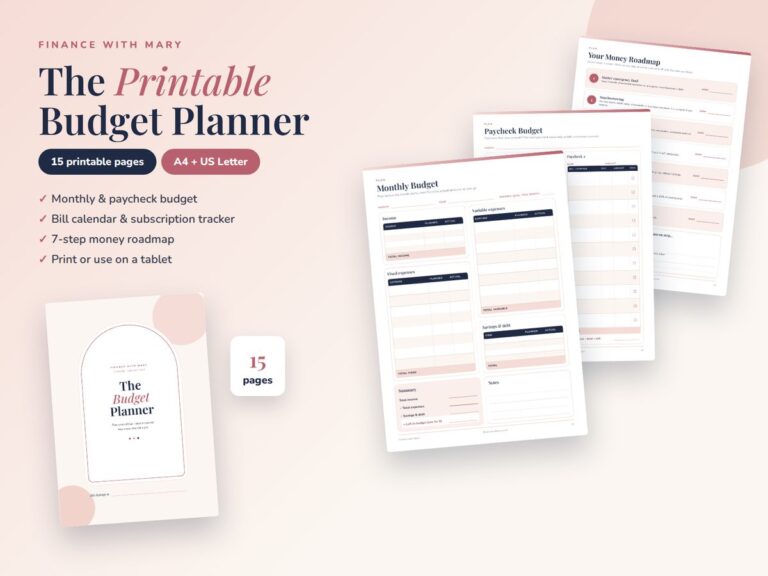
The Printable Budget Planner
15 beautiful printable pages: monthly and paycheck budgets, bill calendar, trackers and a 7-step money roadmap.
