
If you want a budget that takes ten minutes instead of ten hours, the 50/30/20 rule is a great place to start. It doesn’t ask you to track every coffee. Instead, it splits your take-home pay into three simple buckets.
What is the 50/30/20 rule?
The rule divides your monthly take-home income like this:
- 50% for needs — the things you must pay to live and work.
- 30% for wants — the things that make life enjoyable but aren’t essential.
- 20% for savings and debt repayment — your future self.
It is a guideline, not a law. Its strength is that it gives you a quick way to check whether your spending is balanced.
What counts as a need?
Needs are expenses you would still have to pay even if you cut back hard:
- Rent or mortgage
- Utilities (electricity, water, gas)
- Basic groceries
- Transport to work
- Insurance
- Minimum payments on debts
- Childcare and essential school costs
Be honest here. A basic phone plan is a need; the newest phone on a premium contract is partly a want.
What counts as a want?
Wants are the extras: eating out, takeaways, streaming services, new clothes beyond the basics, hobbies, holidays, gadgets and nights out. Wants aren’t bad — a budget with no fun in it rarely lasts. The rule simply puts a limit on them.
What goes in the 20%?
This bucket builds your future:
- Your emergency fund
- Extra payments on debt (above the minimum)
- Savings goals like a home deposit or a car
- Retirement and long-term investing
Real examples
Example 1: Take-home pay of $2,000 a month
- Needs (50%): $1,000
- Wants (30%): $600
- Savings and debt (20%): $400
Example 2: Take-home pay of $3,500 a month
- Needs (50%): $1,750
- Wants (30%): $1,050
- Savings and debt (20%): $700
Example 3: A couple bringing home $5,000 a month
- Needs (50%): $2,500
- Wants (30%): $1,500
- Savings and debt (20%): $1,000
The maths is simple. The real work is comparing these targets with what you actually spend.
How to use the rule in three steps
- Find your take-home income. Use the amount that reaches your bank account.
- Sort last month’s spending into needs, wants and savings/debt. Your bank statement is enough.
- Compare with 50/30/20. Where are you over? Where are you under?
Most people find their wants are higher than they thought — and their savings lower. That’s normal, and it’s useful information.
What if your needs are more than 50%?
In many cities, housing alone can take 35–40% of income, so needs of 60% or more are common. If that’s you, don’t panic. Try:
- A 60/20/20 split for now — fewer wants, savings protected.
- Reviewing big fixed costs once a year: insurance, phone, internet and energy plans.
- Looking at transport and housing options over the longer term.
- Increasing income with extra hours or a side hustle.
The point isn’t to hit exact percentages. It is to make sure some money always goes to your future.
What if you have a lot of debt?
If you are carrying high-interest debt like credit cards, consider shifting some of your “wants” money into the 20% bucket for a while. A temporary 50/20/30 split — with 30% going to savings and debt — can speed up your progress dramatically. Read debt snowball vs avalanche to choose a payoff method.
Pros and cons of the 50/30/20 rule
Pros
- Simple and quick to set up
- Flexible — you choose how to spend within each bucket
- Builds savings into the plan from day one
Cons
- Less detailed than a full budget, so small leaks can go unnoticed
- Percentages may not fit high-cost areas or very low incomes
- The line between needs and wants can get blurry
Is 50/30/20 right for you?
If you are new to budgeting or hate tracking every expense, it is an excellent starting point. If you want more control — for example, to pay off debt quickly — you might prefer zero-based budgeting, where every dollar gets a specific job.
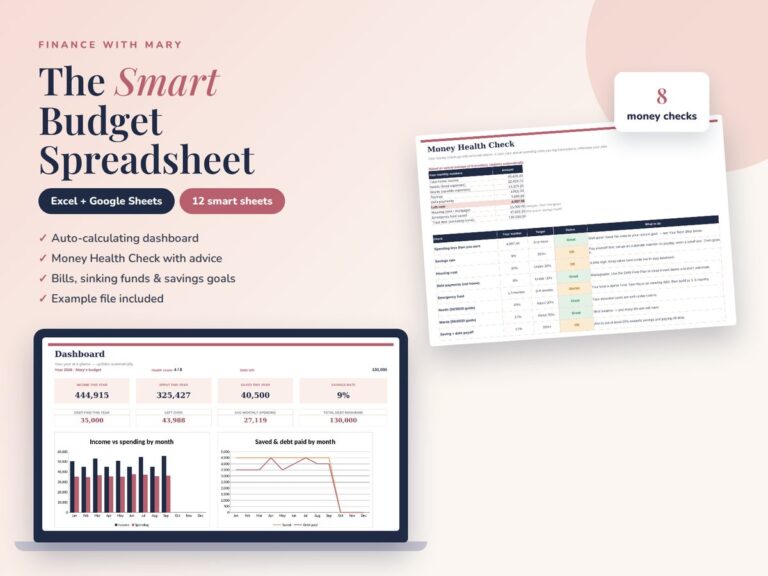
Want the percentages worked out for you? The Smart Budget Spreadsheet includes a Money Health Check that compares your needs, wants and savings with the 50/30/20 guide automatically and tells you what to adjust.
 Most popular
The Smart Budget Spreadsheet
12 smart sheets: dashboard, Money Health Check with personal advice, bills, sinking funds, savings goals and more.
Start with the rule, see where you stand, and adjust. A simple budget you use beats a perfect one you don’t.
