
Have you ever reached the end of the month and wondered where your money went? Zero-based budgeting solves that problem by deciding where every dollar goes before you spend it.
It sounds intense, but it is one of the most freeing ways to manage money. When everything has a plan, you can spend without guilt — because you know the bills, savings and goals are already taken care of.
What is zero-based budgeting?
A zero-based budget follows one simple formula:
Income − everything you plan to spend, save and repay = 0
“Zero” doesn’t mean your bank account is empty. It means every dollar has been assigned a job — rent, groceries, savings, debt, fun money. Nothing is left floating around waiting to disappear.
Why it works so well
- It makes you intentional. You decide on purpose instead of by accident.
- It stops money “leaking”. Unassigned money tends to get spent on small things that add up.
- It speeds up goals. Leftover money goes straight to debt or savings.
- It adapts every month. Each month gets its own plan, so birthdays, school fees and car services are built in.
How to create a zero-based budget
1. Start with this month’s income
Write down the take-home pay you expect this month. If you are paid weekly or fortnightly, count only the paychecks that arrive this month.
2. List the essentials first
Housing, utilities, food, transport, insurance and minimum debt payments come first. These keep a roof over your head and the lights on.
3. Add savings and extra debt payments
Before any wants, decide what goes to your emergency fund, your goals and any extra debt payments. Paying your future first is the heart of the method.
4. Plan your variable and fun spending
Groceries, fuel, eating out, clothes, gifts, hobbies. Give each one a realistic limit.
5. Adjust until you reach zero
If money is left over, give it a job — usually extra savings or debt. If you are below zero, trim wants first, then look for bigger savings.
A simple example
Imagine Sarah brings home $2,800 this month.
- Rent: $950
- Utilities and internet: $180
- Groceries: $400
- Transport and fuel: $220
- Insurance: $90
- Phone: $35
- Credit card minimum: $75
- Emergency fund: $250
- Extra credit card payment: $200
- Sinking fund for car repairs: $60
- Eating out: $120
- Personal spending: $100
- Gift for a friend’s birthday: $40
- Miscellaneous buffer: $80
Total: $2,800. Income minus plan equals zero — every dollar has a job.
Tips to make it stick
- Budget before the month starts. Ten minutes at the end of each month to plan the next one is all it takes.
- Keep a small buffer. A “miscellaneous” line of $50–$100 absorbs surprises without breaking the plan.
- Move money between categories, not out of savings. Overspent on groceries? Take it from eating out, not from your emergency fund.
- Use sinking funds for big, predictable costs. See our guide to sinking funds.
- Track as you go. Check your spending at least once a week.
Zero-based budgeting with an irregular income
If your income changes, budget using your lowest expected month. When extra money arrives, assign it immediately — to savings, debt or next month’s budget. Over time, try to build a one-month buffer so you can live on last month’s income. Read more in how to budget with an irregular income.
Common questions
Do I have to track every single purchase? Tracking helps a lot, especially in the first few months. Once you know your patterns, weekly check-ins are often enough.
What if I go over in a category? Move money from another category and adjust. A budget is a living plan, not a test you pass or fail.
Is it better than the 50/30/20 rule? It is more detailed. The 50/30/20 rule is quicker; zero-based budgeting gives you more control. Many people start with 50/30/20 and switch once they are comfortable.
Try it this month
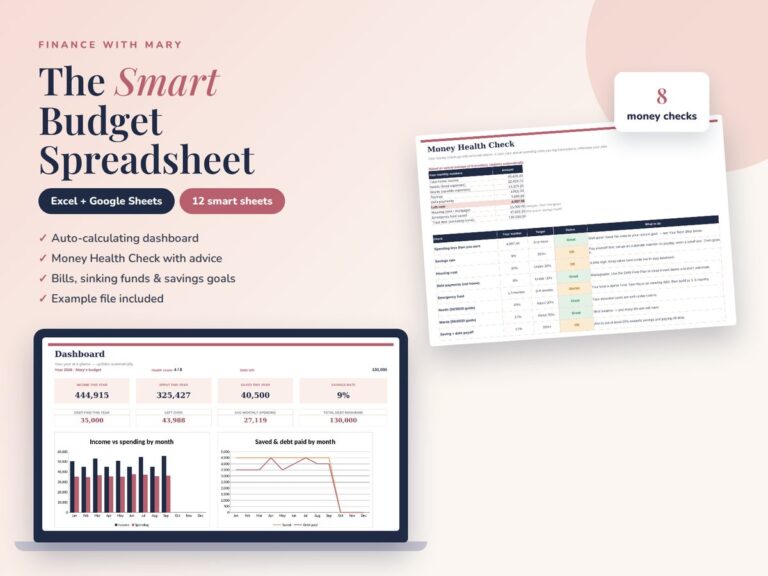
Grab a notebook or our free newsletter planner, list your income and give each dollar a job. If you would like the maths done for you, the Smart Budget Spreadsheet shows a “left to budget” figure that tells you exactly how close to zero you are.
 Most popular
The Smart Budget Spreadsheet
12 smart sheets: dashboard, Money Health Check with personal advice, bills, sinking funds, savings goals and more.
