
Getting credit has never been easier. A few taps on your phone and you can have a loan, a new card or a “pay later” plan. Paying it back is the hard part. Before you sign anything, take ten minutes to answer these questions honestly.
1. Is this a need or a want?
Borrowing for a true need — a car you require for work, an urgent medical cost — is different from borrowing for a holiday, a new phone or a party. If it’s a want, the best answer is usually to save up first. (Not sure? Read needs vs wants.)
2. Have I waited at least 30 days?
Many borrowing decisions are emotional. A 30-day waiting period lets the excitement fade. If you still want it after a month, you can make a calm decision.
3. Could I save up for it instead?
Take the monthly payment you would make on the loan and imagine saving it instead. How long until you could pay cash? Often it is only a few months longer — and you keep the interest.
4. What is the total cost?
Don’t look only at the monthly payment. Work out:
Monthly payment × number of months + all fees = total cost
Subtract the amount you are borrowing. That is the price of borrowing. A $5,000 loan can easily cost $1,000–$2,000 extra over a few years.
5. What are all the fees?
Ask about set-up fees, admin fees, early repayment penalties, late fees and any insurance added to the loan. Fees can turn a “low rate” into an expensive deal.
6. Is the interest rate fixed or variable?
A variable rate can rise, making your payments bigger. Make sure you could afford the payment if rates went up.
7. Can I afford the payment comfortably?
A common rule of thumb is to keep all non-mortgage debt payments under 10–15% of your take-home pay. Check your budget: after this payment, will you still be able to save and handle surprises?
8. What happens if my income drops?
Could you still pay if you lost overtime, got sick or lost your job? Do you have an emergency fund? Borrowing without a safety net is risky.
9. Will it still be worth something when it’s paid off?
Borrowing for something that lasts — like education or a reliable car — can make sense. Borrowing for things that are used up quickly (meals, holidays, clothes) means you keep paying long after the benefit is gone.
10. Have I compared other options?
Compare at least three offers. Check whether you could use savings, buy second-hand, choose a cheaper option or wait. Sometimes the best loan is no loan.
How to score your answers
- All “yes” (or the safe answer): you’ve thought it through. Borrow the smallest amount for the shortest time you can.
- One or two concerns: slow down. Could you wait and save instead?
- Three or more concerns: don’t borrow right now. Make a savings plan instead.
Things you should never borrow for
- Holidays and travel
- Weddings and parties
- Everyday bills and groceries (a warning sign — see signs of too much debt)
- Gambling or “get rich quick” schemes
- Gifts for other people
If you really must borrow
- Borrow the smallest amount for the shortest time
- Choose a fixed rate without early repayment fees
- Read the whole contract before signing
- Set up automatic payments so you’re never late
- Pay extra whenever you can
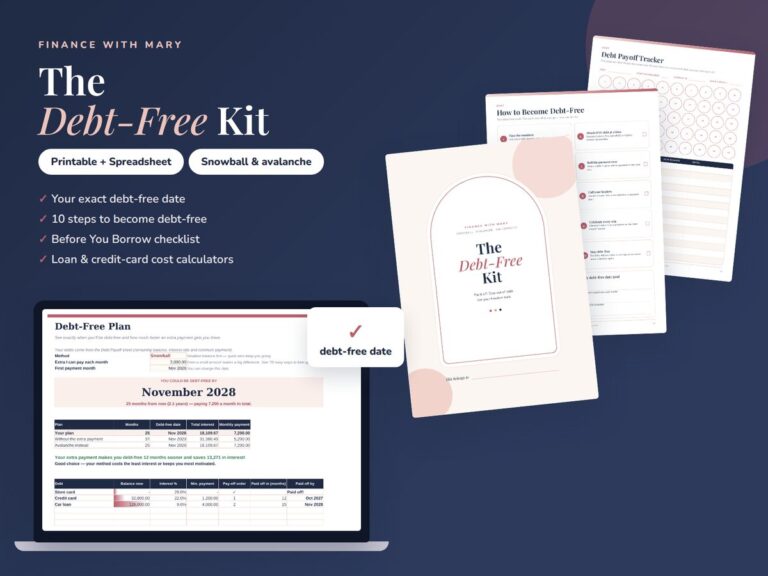
The Debt-Free Kit includes a printable Before You Borrow checklist and a loan cost calculator that shows the true cost of any loan before you sign.
 New
New
The Debt-Free Kit
Printables + spreadsheet: your debt-free date, a 10-step plan, payoff trackers and a Before You Borrow checklist.
