
Most people only look at their finances when something goes wrong. A monthly money date flips that around: a calm, regular half-hour where you check in with your money before problems grow.
Make it pleasant. Pour a cup of tea, put on some music and treat it as time for your future self, not a chore.
Why a monthly check-in works
- You catch overspending early, while there is time to fix it.
- You plan for next month’s birthdays, bills and events.
- You see your progress — which keeps you motivated.
- Money stops being a source of constant background worry.
The 30-minute agenda
Minutes 1–5: Gather your numbers
Open your bank app or statements, your budget and any debt or savings balances. Have everything in one place before you start.
Minutes 5–12: Review last month
Compare what you planned with what actually happened:
- Did you spend more or less than planned in each category?
- Where were the surprises?
- Did all bills get paid on time?
Be curious, not critical. The goal is to learn, not to feel guilty.
Minutes 12–17: Celebrate progress
Write down your wins. How much did you save? How much debt did you repay? Did you resist an impulse buy? Small wins add up, and noticing them keeps you going.
Minutes 17–25: Plan next month
Look at the calendar for the month ahead:
- Birthdays, events or travel
- Annual bills or renewals
- School costs or car services
Then build next month’s budget, giving every dollar a job (see zero-based budgeting).
Minutes 25–30: Check your goals
Update your savings goals, debt balances and, every few months, your net worth. Ask yourself: am I on track? Do I need to adjust anything?
Questions to ask yourself
- What went well with money this month?
- Where did I overspend, and why?
- Is there a subscription or bill I can reduce?
- What is my one money goal for next month?
- How do I feel about my money right now?
Doing it as a couple
If you share finances, make it a joint date. Keep it positive: start with wins, avoid blame, and agree on one or two goals together. Our guide to talking about money with your partner has more tips.
Tips to make it a habit
- Put it in your calendar on the same day each month — for example, the last Sunday.
- Pair it with something you enjoy: a favourite snack or coffee.
- Keep it short. Thirty minutes is enough.
- Use the same template each month so it becomes routine.
Weekly mini check-ins
For extra control, add a five-minute weekly check: look at your balance, upcoming bills and how much is left in each spending category. Weekly check-ins make the monthly date faster and easier.
Frequently asked questions
How long should a money date take?
Around 30 minutes once a month is enough for most people. If you are just starting out, your first one may take an hour while you gather statements and set up your budget. After that, it gets quicker.
What if I find I overspent?
Don’t panic or give up. Look at why it happened — was it a one-off, or a category that is always too small? Then adjust next month’s plan. Overspending is information, not failure.
Do I need special software?
No. A notebook, your banking app and a simple budget template are all you need. Use whatever you will actually open every month.
Our printable planner includes a Monthly Review page with these exact prompts, plus space to celebrate wins and set goals for the month ahead.
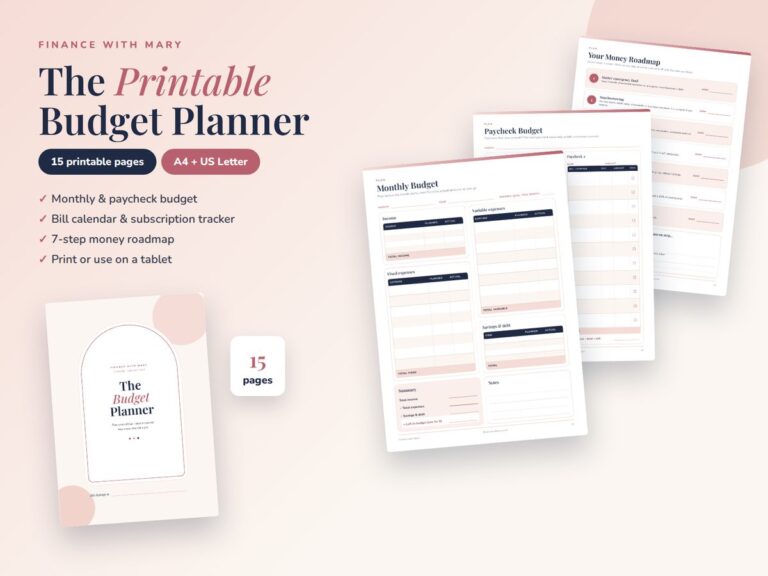
The Printable Budget Planner
15 beautiful printable pages: monthly and paycheck budgets, bill calendar, trackers and a 7-step money roadmap.
