
This article is general education, not personal financial advice. Investing involves risk, including the possible loss of money. Consider speaking to a qualified, independent adviser about your situation.
Investing can feel confusing and a little scary — full of jargon and stories of people getting rich (or losing everything). The truth is simpler. Here are the basics every beginner should understand before starting.
What is investing?
Investing means putting money into something you expect to grow in value over time, such as shares in companies, bonds or property. Unlike a savings account, the value of investments can go up and down. In exchange for that risk, investments have historically had the potential to grow faster than savings over long periods — but past performance never guarantees future results.
Get your foundations in place first
Before investing, many experts suggest you:
- Have a budget and spend less than you earn.
- Have an emergency fund of three to six months of essentials — see how to build one.
- Pay off high-interest debt. Credit card interest is often higher than typical investment returns.
This order follows our 7-step money roadmap.
Key terms in plain English
- Shares (stocks): a small piece of ownership in a company.
- Bonds: lending money to a government or company in return for interest.
- Funds: a collection of many investments in one, managed together.
- Index fund: a fund that aims to follow a whole market (for example, a group of large companies), usually with low fees.
- Diversification: spreading money across many investments so one bad result doesn’t ruin everything.
- Compound growth: earning returns on your past returns, which can make a big difference over many years.
- Fees: charges for managing your investments. Small differences in fees add up over time.
Understand risk and time
The value of investments can fall, sometimes sharply, and you could get back less than you put in. That’s why money you’ll need in the next few years — for a house deposit, car or emergencies — is usually better kept in savings. Investing is generally better suited to long-term goals of five years or more, giving time to ride out ups and downs.
Common beginner mistakes
- Investing money you’ll need soon
- Putting everything in one company or trend
- Panic selling when markets fall
- Chasing “hot tips” or social media hype
- Ignoring fees
- Falling for scams promising guaranteed or very high returns
How to spot an investment scam
Be very cautious if someone:
- Promises guaranteed, high or fast returns
- Pressures you to decide quickly
- Contacts you out of the blue on social media or by phone
- Asks you to recruit others
- Isn’t registered with your country’s financial regulator
Always check that a company or adviser is authorised by your local financial regulator before handing over money.
Retirement accounts
Many countries offer retirement or pension accounts with tax benefits, and some employers add contributions. These rules differ widely between countries, so research what’s available where you live — it can be one of the most valuable places to start.
Start with knowledge, not money
Read, ask questions and understand what you’re investing in before you start. There’s no rush. Building strong foundations — a budget, an emergency fund and no high-interest debt — puts you in the best position to invest with confidence.
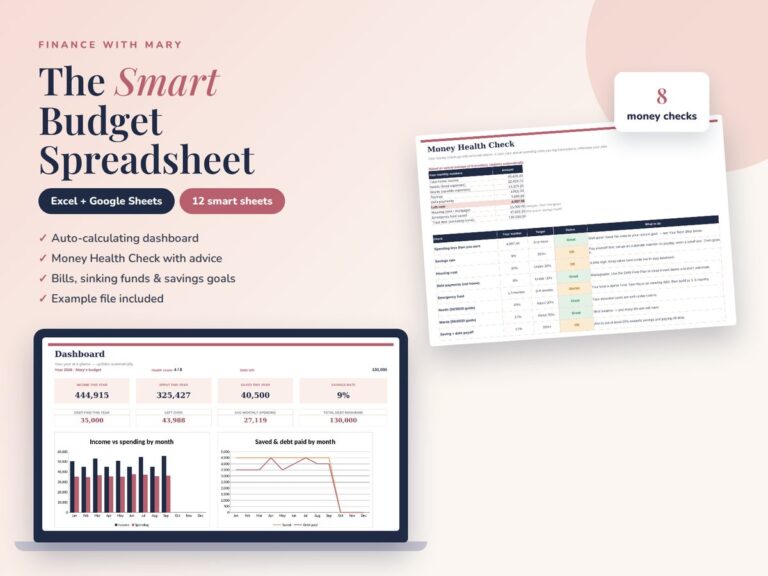
Want to check whether your foundations are ready? The Money Health Check in the Smart Budget Spreadsheet shows your emergency fund, debt and savings rate at a glance.
 Most popular
The Smart Budget Spreadsheet
12 smart sheets: dashboard, Money Health Check with personal advice, bills, sinking funds, savings goals and more.
